The world's largest company is borrowing billions. Why is Nvidia turning to lenders?

Nvidia is sitting on tens of billions of dollars in profits and is growing faster than almost any company in history. Yet, after five years, it has returned to the bond market. Investors offered it over $85 billion within a few hours.
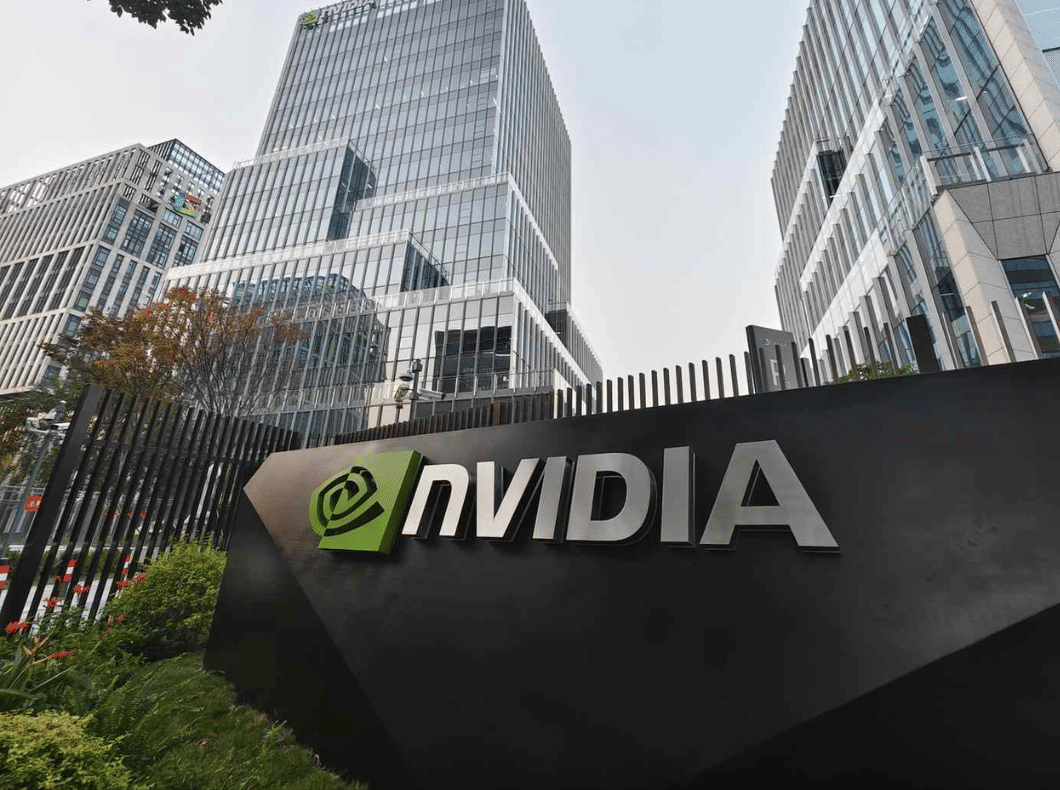
The company at the very heart of the AI revolution has just done something few expected of it. Nvidia $NVDA has entered the corporate bond market for the first time since 2021 and plans to borrow at least $20 billion. However, this is not a move by a company that needs to bail out its balance sheet. Quite the opposite.
The issuance is divided into seven tranches with maturities ranging from two years to 2056. The last time Nvidia borrowed in a similar manner was in June 2021, but at that time it raised only $5 billion. The current offering is thus approximately four times larger. And the market’s reaction showed just how strong investor confidence in the artificial intelligence narrative is today.
Creditors are lining up
Demand for the new bonds surged to roughly $85 billion, more than four times the originally planned issuance volume. Nvidia therefore increased the offering and could raise up to $25 billion instead of the original $20 billion .
This is what happens when investors are literally scrambling for the chance to lend money to a company. Moreover, the yield on the longest-term tranche fell by about a quarter of a percentage point during the subscription period compared to the original spread. Nvidia will thus ultimately borrow at a lower cost than it originally expected.
The offering is being led by Wall Street’s three largest banks: Goldman Sachs $GS, J.P. Morgan $JPM, and Morgan Stanley $MS. These banks compete for such transactions precisely because they represent minimal credit risk and, at the same time, generate enormous investor interest.
Nvidia intends to use the proceeds for general corporate purposes, including repaying and refinancing a portion of its existing debt.
A spokesperson for Nvidia
A cash cow that still borrows
Nvidia is among the most profitable companies today. In the most recent reported quarter, it generated $81.6 billion in revenue, an 85% year-over-year increase. Operating cash flow reached $36.2 billion, more than doubling year-over-year. Meanwhile, the gross margin remains at an extraordinary 74.9%.
So why does a company like this need to borrow at all?
There isn’t as much cash in the company’s accounts as one might think. As of the end of April, Nvidia had roughly $13.2 billion in cash and cash equivalents. For a company with a market value of over $5 trillion, that’s not a staggering amount. A large portion of the capital is tied up in inventory, prepaid production capacity, or returned to shareholders through buybacks.
If the company can borrow on favorable terms, it gives it greater flexibility. It doesn’t have to dip into its own cash, can refinance older liabilities, and at the same time maintain room for further investments. At a time when AI spending is in the hundreds of billions of dollars, financial flexibility is more valuable than ever.
AI is no longer just about chips
Nvidia is also becoming part of a much broader trend. The largest tech companies are signaling that the AI race is just gaining momentum. Total investments by major tech firms could exceed $700 billion this year, whereas just last year they hovered around $400 billion.
Alphabet $GOOG is raising capital through new stock offerings. Amazon $AMZN, Meta $META, and Nvidia are increasingly relying on bond financing. Oracle $ORCL and Supermicro $SMCI are combining both approaches.
Meanwhile, the volume of AI-related debt has grown to more than $1.2 trillion, becoming one of the largest segments of the investment-grade corporate bond market. Just a few years ago, tech companies financed most of their growth primarily from their own cash flow.
This level of issuance is likely not a one-off event, but the beginning of a longer-term trend that will continue as investment in AI grows further.
Analysts at M&G Investments
Nvidia itself does not build massive data centers. Its customers do. The official purpose of the issuance is general corporate needs and debt refinancing. Nevertheless, investors view this transaction as further evidence that the AI era is increasingly becoming an era of cheap capital as well.
What’s Changing
For many years, a simple rule applied: whoever has the best technology wins. That still holds true, but today it is no longer enough.
In addition to technological superiority, the ability to finance the massive investments required by AI is also becoming a deciding factor. Computing infrastructure, data centers, energy, and chip manufacturing cost hundreds of billions of dollars, and financing them is becoming just as important as the technological edge itself.
Bond investors are now betting that Nvidia will have enough money to pay both interest and principal for decades to come. At the current rate of growth, almost no one doubts this.
So far, the market has no doubts. Demand for the bonds far exceeded supply, and Nvidia’s stock rose following the announcement of the offering. The fact that the world’s most valuable company has turned to creditors is nonetheless a symbol of a new era. Artificial intelligence is no longer just a technological race. It is also becoming a race for the capital that can finance it.