Well-known investment strategist Mike Wilson sees the end of the bear market. What makes him think so?

Mike Wilson has recently come to the attention of investors with his stock market predictions that have been eerily accurate. But this may now be partly playing into our hands. Wilson sees the end of the bear market. What makes him think so?
As a young investor, it's important to understand market dynamics, seek advice from experienced financial professionals and learn from their insights to make informed decisions. One such expert is Michael Wilson, chief equity strategist for Morgan Stanley. With years of experience in the financial sector and a reputation for providing valuable market insights, Wilson's opinions are worth considering for any investor, regardless of age or experience.
The End of the Bear Market: A Painful Conclusion
Michael Wilson recently stated that continued stress in the banking system marks the beginning of the painful end of the bear market in U.S. stocks. He argues that the Federal Reserve and Federal Deposit Insurance Corporation (FDIC) pledging of bank deposits is not another form of quantitative easing (QE), but rather signals the end of the bear market as declining credit availability suppresses economic growth.
Wilson believes the S&P 500 index will remain unattractive until the equity risk premium climbs to 400 basis points from its current level of 230. The increase in the equity risk premium suggests that investors are demanding a higher return for the risk they are taking on stocks, reflecting a lack of confidence in the market.
Global financial system concerns
The collapse of Silicon Valley Bank and the sell-off in Credit Suisse Group AG shares have fuelled concerns about the health of the global financial system. These events have caused market fluctuations that are likely to affect the portfolios of young investors unless they are well diversified and prepared for current market conditions.
Wilson stresses that the turmoil in the banking system should lead investors to focus on the deteriorating growth outlook amid restrictive credit conditions. With the risk of a credit crunch increasing significantly, he expects analysts to lower expectations as the reporting period approaches.
As a young investor, it is imperative to heed Wilson's recommendation to position in defensive sectors and low beta stocks. This strategy will help protect your investments during market downturns, as these sectors tend to be less volatile and more resilient. Additionally, Wilson cautions against the notion that large-cap technology stocks are immune to growth concerns. While these companies have demonstrated strong growth in the past, they are not exempt from the influence of a bear market.
Signals of a recession: the inverted yield curve
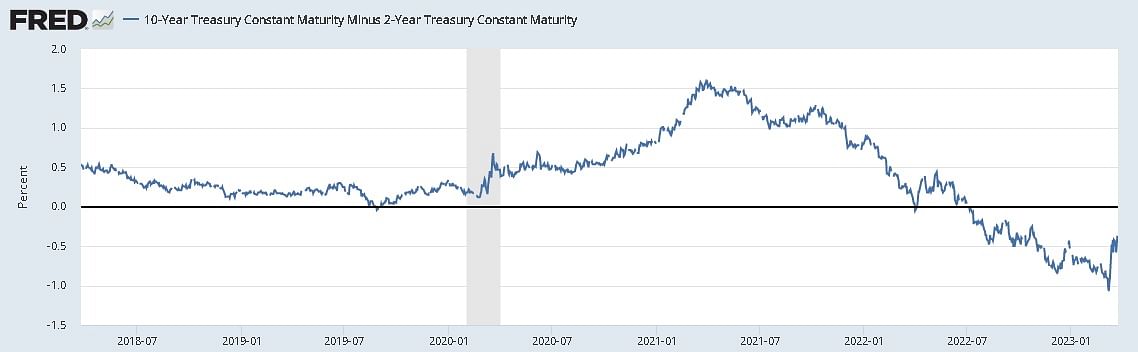
A chart of the 10-year bond yield minus the two-year bond yield.
JPMorgan Chase & Co. strategists share a similar view to Wilson. They predict a difficult time for the markets, suggesting that an inverted yield curve signals a recession. The yield curve inverts when long-term interest rates fall below short-term rates, suggesting that investors have little confidence in the economy's long-term prospects.
Conclusion
For young investors, the insights provided by Michael Wilson and other financial experts offer valuable guidance in navigating the complexities of the current bear market. By understanding these market dynamics, focusing on the deteriorating growth outlook, and allocating investments to defensive sectors with low betas, young investors can better protect their portfolios and set themselves up for long-term success.
WARNING: I am not a financial advisor, and this material does not serve as a financial or investment recommendation. The content of this material is purely informational.